Mother of God Gruzinskaya
- Artist: Uidentifisert, Novgorod-skolenArtist - uncertain
- Creation date: Begynnelsen eller første halvdel av 1500-tallet
About
The Virgin Mary, denominated the “Mother of God” in the Russian Orthodox tradition, is shown carrying the Infant Jesus on her left arm. With her right hand she points to the boy as the Saviour; she is Hodegetria, “She Who Shows the Way”, one of the oldest and most important iconographic depictions of the Virgin Mary. Legend has it that it was Luke the Evangelist who first painted the image of the Infant Jesus on the Virgin’s arm. This icon was supposedly stored in the Hodegon Monastery in Constantinople, before being duplicated in countless other icons and then disappearing without a trace.
The iconography includes several fixed symbols of theological import: The Virgin’s sombre mien and bent, covered head express both her veneration of her son and her pain over his future death on the Cross. Her reddish brown cape has been adorned with three stars, signifying the Virgin’s status as the Queen of Heaven and her virginity before, during, and after giving birth. The Infant Jesus is depicted as a learned priest, with a scroll in the one hand and making a sign of benediction with the other.
An icon is a sacred picture that is particularly associated with the theology, churches, and religious services of the Orthodox Church. An icon is usually painted with egg tempera on specially prepared wood panels in a traditional style. This style featured simplified elements and accentuated the surface, as in this Russian icon from Novgorod. The picture’s neutral gold-leaf background, pure, chromatic fields, symmetry, and clear contours are all characteristic elements. The Late Middle Ages witnessed the emergence of an autonomous Russian style that combined Byzantine impulses with elements from folk art. Icons were often painted by anonymous monks.
- Collection catalogue icons
**Mother of God Gruzinskaya **
The Mother of God is depicted half-figure, wearing a deep red veil (maphorion) with brighter red lining over a bluish-green undergarment. On her left arm sits the infant Jesus in a white undergarment with a green sash and an ochre coloured overgarment with gold hatching added at a later date. Much of the gilt background has been worn away, although traces remain in the embossed halos with their four-petalled flower patterns. This large icon was probably painted for an iconostasis where it was placed to the left of the royal door. This image is modelled on an older miraculous icon frequently referred to as “the Georgian” (Gruzinskaja). The earlier work acquired this byname following its return to Georgia from Persia around the year 1625, where it had been taken some years previously, during the occupation of Georgia by Shah Abbas I.
Characteristic of icons of this type is the lace-trimmed neckline on the veil with a coloured border, and the crossed legs of the infant Jesus. With his right hand Christ is offering a blessing, while in his left he holds a closed scroll. Almost all the Gruzinskaja icons originate from the area around Novgorod, where they were most widespread in the last quarter of the 15th to the middle of the 16th century. The icon has many retouchings.
- Creation date:
- Begynnelsen eller første halvdel av 1500-tallet
- Other titles:
- Den georgiske Guds Moder (NOR)
Muttergottes von Georgien (GER) - Object type:
- Icon
- Materials and techniques:
- Tempera på tre
- Material:
- Wood
- Dimensions:
- Height: 109.5 cm
- Depth: 5.2 cm
- Width: 80.5 cm
- Keywords:
- Visual art
- Classification:
- 532 - Bildende kunst
- Motif:
- Biblical
- Motif - type:
- Religious scene or person
- Inventory no.:
- NG.M.01521
- Cataloguing level:
- Single object
- Acquisition:
- 1928-1928, Ervervelse, Richard Zeiner-Henriksen
- Owner and collection:
- Nasjonalmuseet for kunst, arkitektur og design, The Fine Art Collections
- Photo:
- Larsen, Frode/Børre Høstland
- Østby, Leif, red. Katalog over utenlandsk malerkunst : med 153 illustrasjoner. Oslo: Nasjonalgalleriet, 1973. kat.nr. 967
- Kjellin, Helge. Russiske ikoner i norsk og svensk eie. Oslo: Dreyer, udatert. s. 229
Nasjonalmuseet's collection catalogue is a living resource of information gathered since the 1830's. Some records may contain language or ideas that today could be perceived as outdated, offensive or discriminatory with regard to for instance gender, sexuality, ethnicity or disability, and that may be at odds with the museum's values regarding equality and diversity.
Do you have suggestions for how this record can be improved? We would like to hear from you!
If you would like more information about specific objects in the collection or about objects that haven't been published online, please contact the museum. You can read more about how we work with the collection and our cataloguing practice here.
Other works by Uidentifisert, Novgorod-skolen
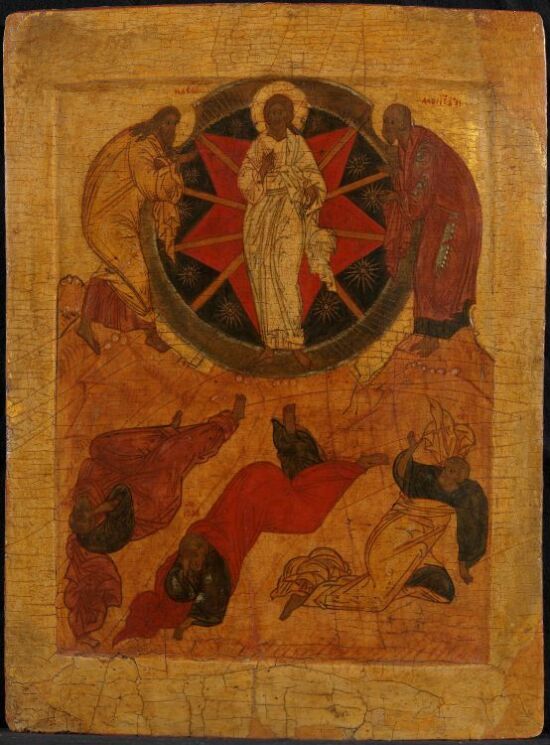
The Transfiguration of ChristUidentifisert, Novgorod-skolenMidten av 1500-tallet
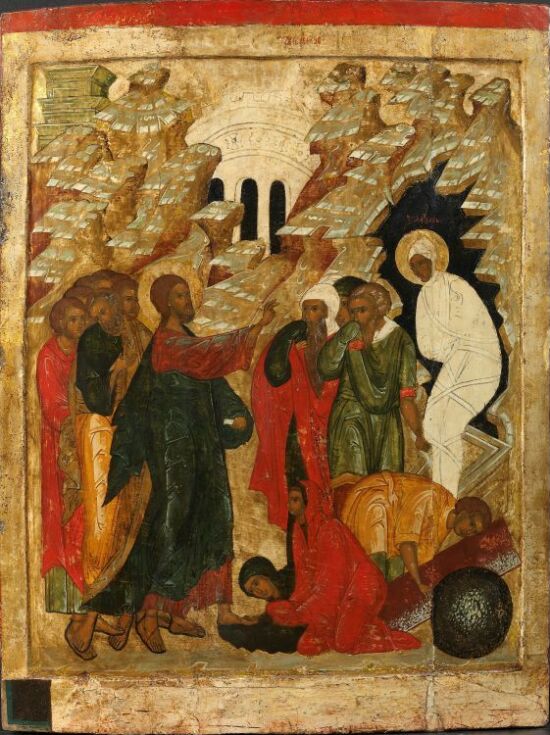
The Raising of LazarusUidentifisert, Novgorod-skolenCa. 1560
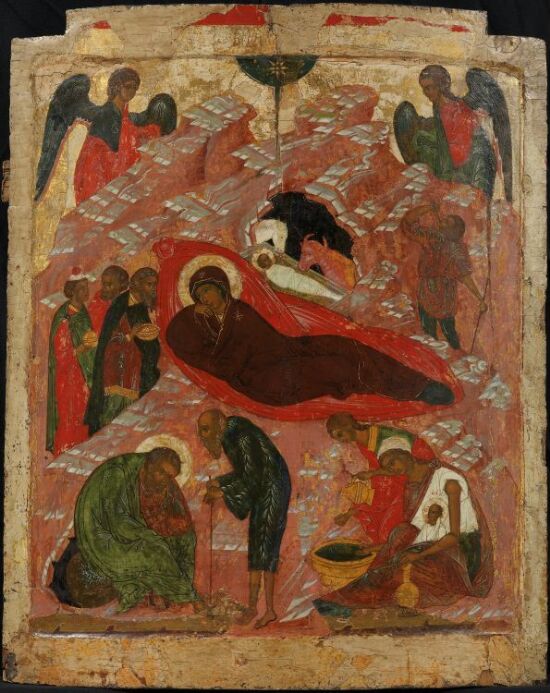
The NativityUidentifisert, Novgorod-skolenMellom 1500 og 1525
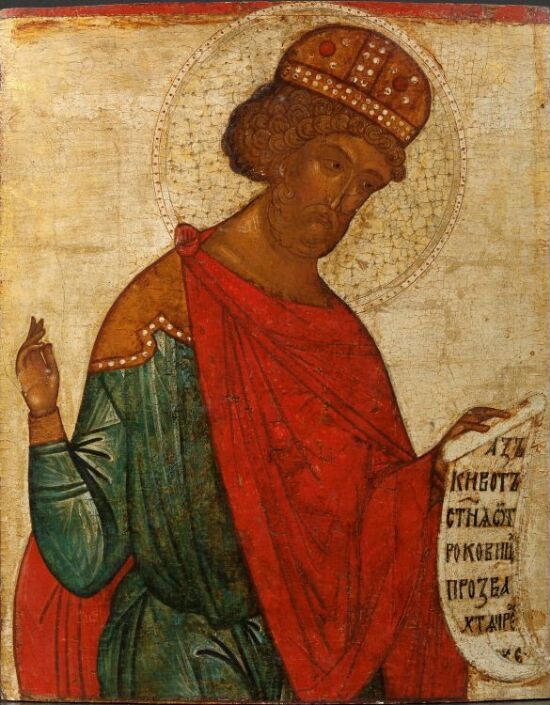
King DavidUidentifisert, Novgorod-skolenSlutten av 1400-tallet
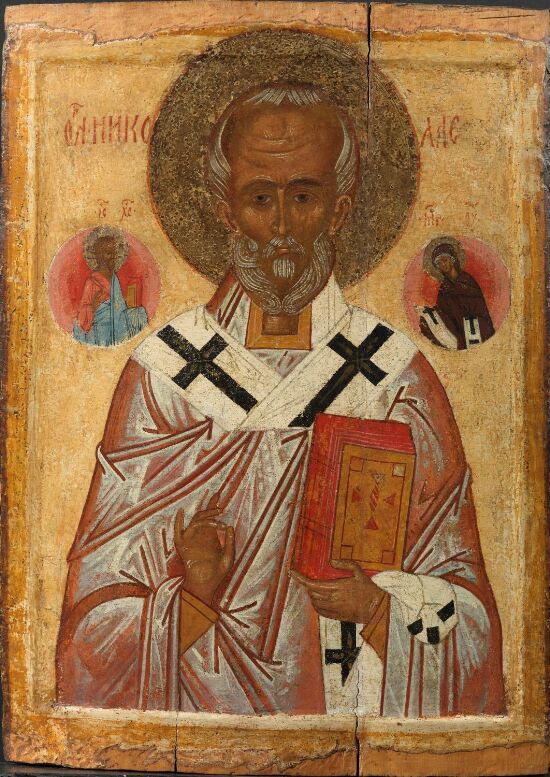
Saint NicholasUidentifisert, Novgorod-skolenSlutten av 1400- eller begynnelsen av 1500-tallet
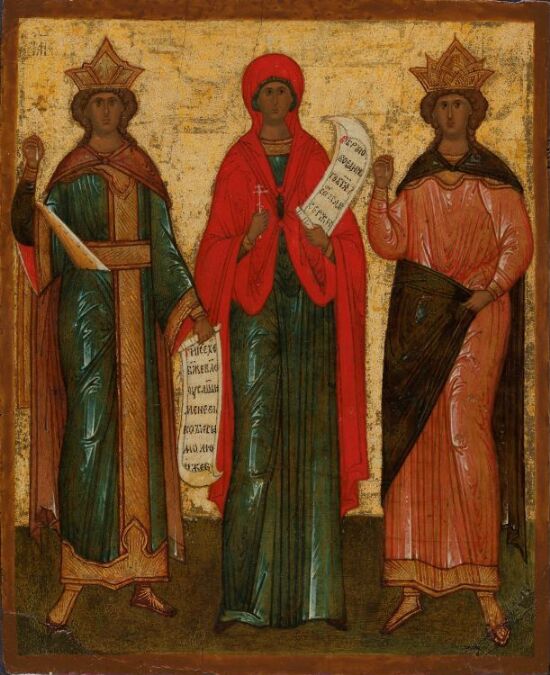
Three female Saints (St. Catherine?, Pyatnitsa, Barbara?)Uidentifisert, Novgorod-skolen1500-tallet
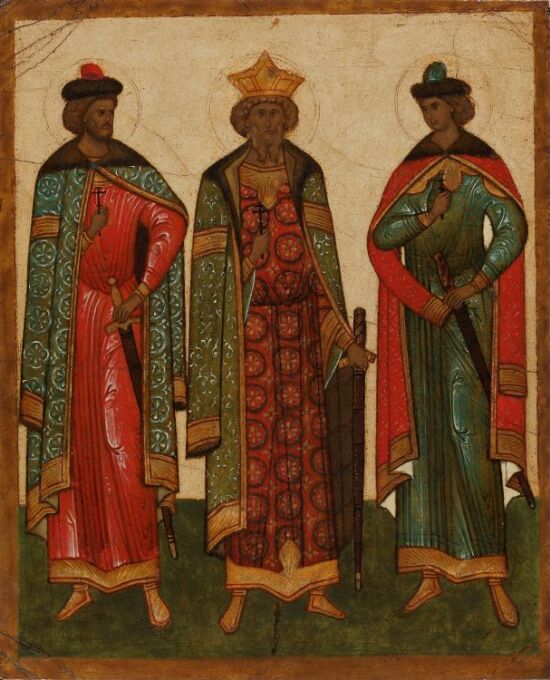
The holy princes Borys, Volodymyr and HlibUidentifisert, Novgorod-skolen1500-tallet
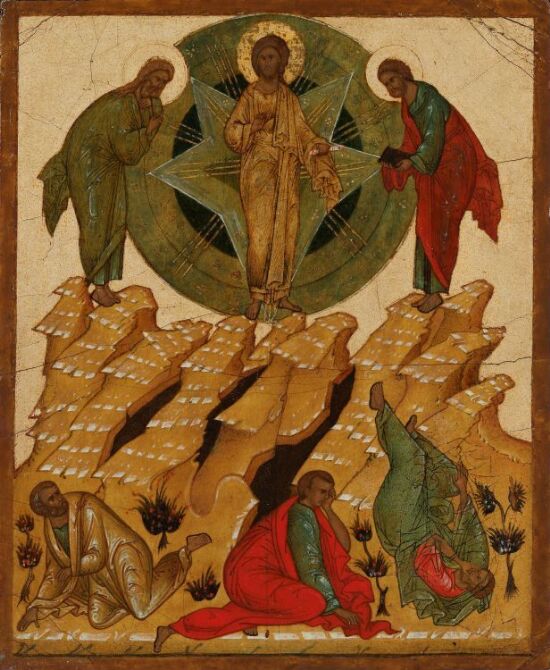
The TransfigurationUidentifisert, Novgorod-skolen1500-tallet
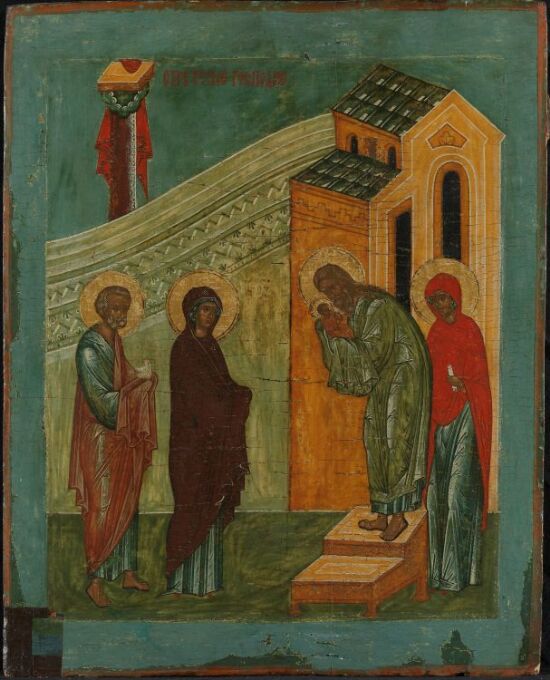
The Presentation of Christ in the TempleUidentifisert, Novgorod-skolenBegynnelsen av 1500-tallet
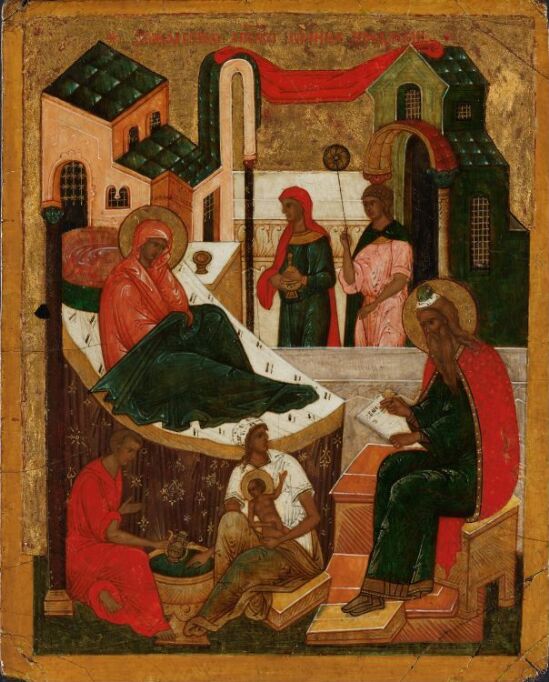
The Birth of Saint John the BaptistUidentifisert, Novgorod-skolen1500-tallet
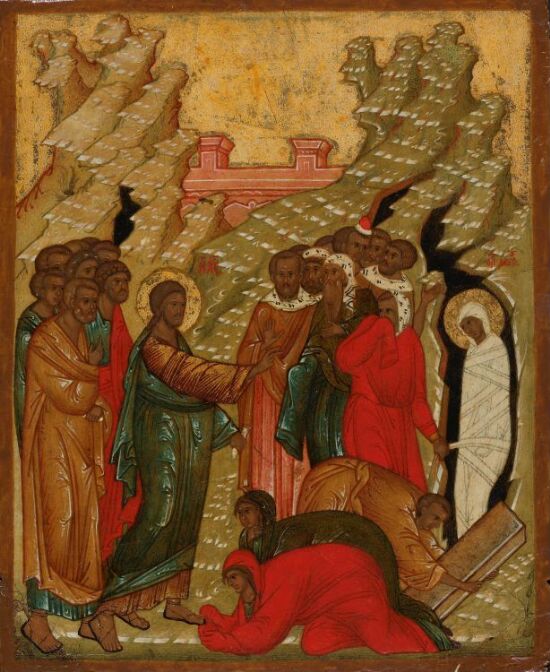
The Resurrection of LazarusUidentifisert, Novgorod-skolen1500-tallet
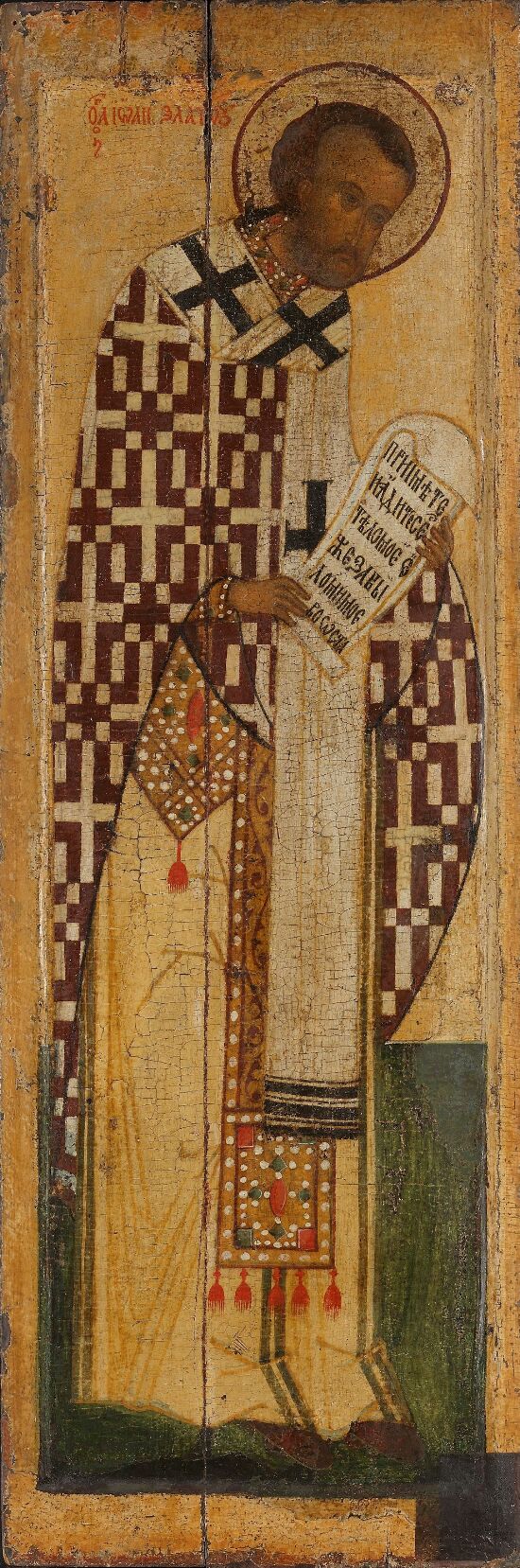
John ChrysostomUidentifisert, Novgorod-skolenSlutten av 1400-tallet