The Nurse
- Artist: Ernst Ludwig Kirchner
- Creation date: 1917 eller 1918
About
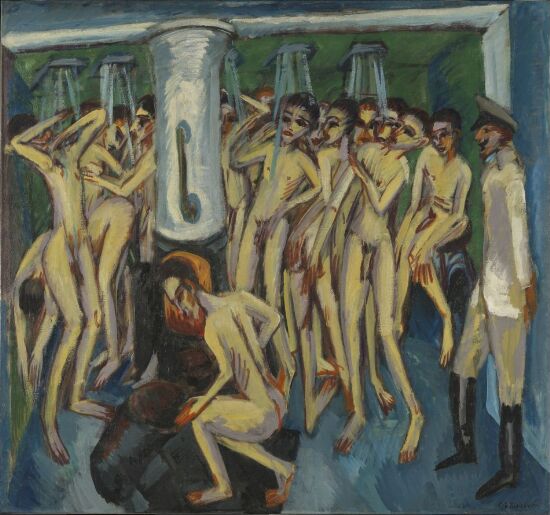
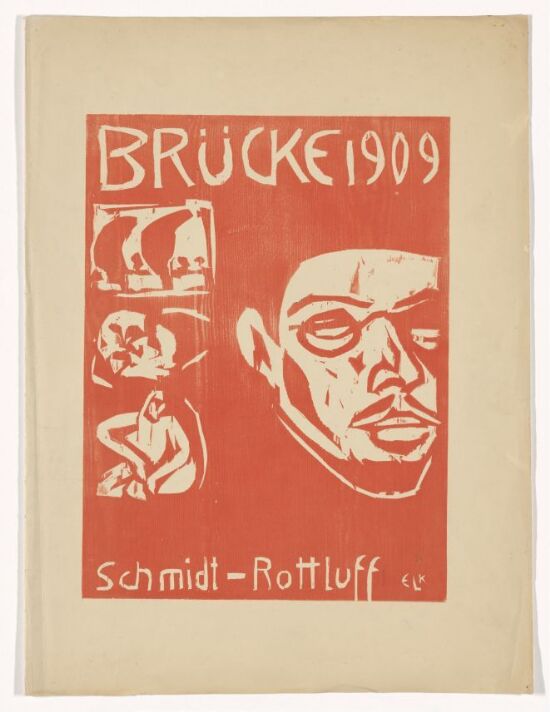
Ernst Ludwig Kirchner was at the very core of German expressionism. In 1905 he co-founded the artist group known as Die Brücke and wrote the group’s programme, which advocated for a radical renewal of art:
“It is we, the youth of today, who carry the future, and we will make elbow room and free ourselves from the old, entrenched powers. He is one of us, he who immediately and truthfully reproduces what inspires him to create.”
At the outbreak of the First World War, Kirchner volunteered for military service, but soon afterwards he suffered from a nervous breakdown. He was thereafter exempted from further service, and during 1916–17 he had intermittent stays at sanatoriums in Switzerland, first in Taunus and then in Davos.
Kirchner continued to paint during these stays, with one of the resultant works being The Nurse. A darkly clad, conspicuously stiff figure is placed at the centre of the painting. The garish patterns of the carpeting and the furniture, the absence of a unifying perspective, and the vista of the distant mountains leaves the painting open to interpretation. The tension between the spatial and figurative aspects can be seen in context with Kirchner’s condition at the time. He was suffering from both paralysis and delusion, and was torn between his dread of conscription and his yearning for the free, pristine nature of the Alps near Davos. All the way until he chose to end his life in 1938, this area remained his home in exile.
- Creation date:
- 1917 eller 1918
- Other titles:
- Sykepasseren (NOR)
Der Krankenwärter (GER) - Object type:
- Painting
- Materials and techniques:
- Olje på lerret
- Material:
- Canvas
- Dimensions:
- Width: 70 cm
- Height: 80.5 cm
- Keywords:
- Visual art
- Classification:
- 532 - Bildende kunst
- Inventory no.:
- NMK.DEP.2012.0007
- Cataloguing level:
- Single object
- Acquisition:
- Loan from Sparebankstiftelsen DNB 2012
- Owner and collection:
- Sparebankstiftelsen DNB, The Fine Art Collections
- Photo:
- Høstland, Børre/Husby, Therese
Nasjonalmuseet's collection catalogue is a living resource of information gathered since the 1830's. Some records may contain language or ideas that today could be perceived as outdated, offensive or discriminatory with regard to for instance gender, sexuality, ethnicity or disability, and that may be at odds with the museum's values regarding equality and diversity.
Do you have suggestions for how this record can be improved? We would like to hear from you!
If you would like more information about specific objects in the collection or about objects that haven't been published online, please contact the museum. You can read more about how we work with the collection and our cataloguing practice here.